


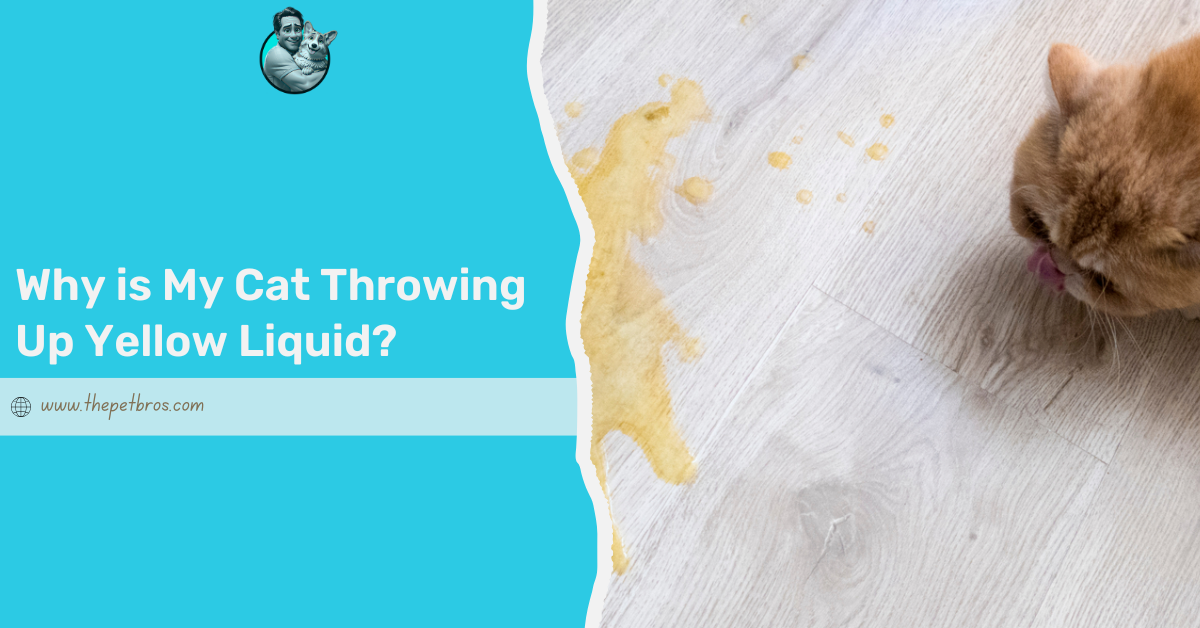
Seeing your cat throwing up yellow liquid can be a confusing and worrying moment. One minute, they are happy and grooming themselves like royalty, and the next, they are leaving a bright yellow puddle on the floor. It looks alarming, smells unpleasant, and instantly makes you wonder what went wrong.
However, before you panic or start imagining the worst, let’s break down what’s really happening when your cat throws up yellow liquid and what you can do about it.
What Exactly Is The Yellow Liquid?
The yellow liquid your cat is throwing up is almost always bile, a digestive fluid made in the liver and stored in the gallbladder. Bile helps break down food during digestion, but when your cat’s stomach stays empty for too long, this fluid can creep into the stomach and irritate the lining. That irritation often leads to vomiting, which is why the puddle your cat leaves behind looks bright yellow and sometimes a little foamy.
In some cases, your cat throwing up yellow liquid may simply mean that your cat licked or chewed something yellow. It could be a plant, toy, or even a bit of food colouring. Cats often use subtle tail movements to show they want something, and if they’ve been wandering around feeling unsettled or hungry, this behaviour can appear just before the vomiting episode.
So while the colour looks alarming, it’s usually a sign that the stomach isn’t in its best condition rather than something dangerous. Understanding why it happens is the first step in helping your cat feel more comfortable.
6 Common Reasons Your Cat Is Throwing Up Yellow Liquid
1. An Empty Stomach
When your cat goes too long without eating, bile can build up and irritate the stomach lining. This irritation often leads to vomiting yellow liquid, especially in the early morning or late at night. Cats with irregular feeding schedules or those who skip meals are more likely to experience this; this usually improves once their eating routine becomes more consistent.
2. Hairballs
As cats groom, they swallow loose fur, which can clump together in the stomach. If the hairball doesn’t move along smoothly, it may irritate the tummy and trigger vomiting. In these moments, the yellow liquid you see is often bile forced up before or alongside the hairball. Some cats may cough lightly while trying to bring up hair, which can happen before the vomiting starts.
3. Eating Risky Things
Cats are naturally curious, and this curiosity sometimes leads to chewing plants, nibbling strings, tasting odd objects or sampling food they were never meant to touch. When something they eat upsets the stomach, the body reacts by trying to get rid of it quickly. This can cause yellow vomit, especially if the item irritates the stomach lining or cannot be digested properly.
4. Sensitive Digestive System
Switching foods without easing your cat into the new diet can confuse their stomach. Some cats also have sensitive digestive systems that react strongly to unfamiliar ingredients, causing vomiting. In these cases, the yellow liquid appears when digestion is disrupted, particularly if they haven’t eaten enough to bring up solid food.
5. Severe Health Problems
Inflammation inside the digestive system or organs that support digestion can lead to consistent yellow vomiting. Conditions like gastritis or pancreatitis can irritate the stomach and cause ongoing nausea. Liver and kidney issues may also trigger vomiting because waste products build up in the bloodstream. Cats with these conditions often show additional signs like reduced appetite, tiredness or occasional discomfort around the belly.
6. Intestinal Blockages
If your cat has swallowed something too large to pass through the digestive tract, it can cause a blockage. A cat throwing up yellow liquid is sometimes an early sign of intestinal blockage, particularly when the stomach is empty. Alongside vomiting, your cat may show worrying signs like weakness, repeated dry heaving or failing to pass stool. In rare cases, ongoing vomiting can also appear in cats with severe digestive inflammation or unnoticed chronic illness.
Symptoms To Watch Out For
If you find your cat throwing up yellow liquid, the symptoms that follow can help you understand how serious the situation is. If they vomit once and continue behaving normally, it is often a mild issue. However, signs like lethargy, reduced appetite or unusual hiding may suggest discomfort. Frequent vomiting, dry heaving or clear tummy pain should not be ignored, especially if diarrhoea or weight loss becomes noticeable.
Cats can also show how they feel through their behaviour. If your cat suddenly starts following you around more than usual, sticking close or seeking reassurance, it may be their quiet way of saying something isn’t right. Respiratory signs, such as mild coughing or sneezing, can occasionally appear if irritation affects more than just the stomach. Paying attention to these changes helps you judge whether the situation is improving or if your cat might need extra care.
Sometimes the changes are subtle, so observing your cat’s daily routine makes all the difference. A normally playful cat becoming quieter, avoiding their favourite spots or showing less interest in grooming can all hint at discomfort. You might also notice them drinking more or less than usual, sitting in a hunched position or appearing restless after meals.
How To Help A Cat Throwing Up Yellow Liquid
- Feed smaller, more frequent meals to prevent long gaps that allow bile to build up and irritate the stomach.
- Keep their diet consistent by avoiding sudden food changes, as quick switches can unsettle sensitive tummies.
- Brush your cat regularly, especially long haired breeds, to reduce the amount of fur they swallow and minimise hairball related vomiting.
- Remove plants, strings, rubber bands and other small objects from their reach to prevent accidental chewing or swallowing.
- Keep clean, fresh water available at all times to support hydration, especially after vomiting.
- Provide calm, stress free spaces where your cat can relax, as anxiety and tension can contribute to digestive issues.
- Use feeding puzzles or slow feeders if your cat tends to eat too quickly, helping them digest food more comfortably.
Now, When Should You See The Vet?
If your cat is throwing up yellow liquid regularly, it is a clear sign that their stomach needs more support than you can offer at home. Occasional vomiting with normal behaviour can happen, but when the episodes become frequent or your cat stops eating, seems weak or starts hiding, it’s time to involve a vet. Cats who begin following you around more than usual or looking unsettled may be looking for comfort because they don’t feel quite right.
If you notice signs such as belly pain, weight loss, diarrhoea or repeated vomiting, don’t wait for things to improve on their own. These symptoms can point to conditions like gastritis, pancreatitis, liver issues, kidney problems or even a blockage.
A vet will be able to assess the underlying cause, run the necessary tests and help your cat feel comfortable and happy again. Acting early gives your cat the best chance of a quick recovery and keeps small problems from becoming bigger ones.
Why is My Cat Throwing Up Yellow Liquid FAQs
Why is my cat vomiting yellow liquid and not eating?
Loss of appetite with vomiting may indicate illness and needs a vet check.
Why is my cat throwing up yellow liquid in the morning?
Overnight fasting can cause bile buildup, leading to early morning vomiting.
Why is my cat throwing up yellow liquid home remedies?
Offer small meals, avoid long gaps between feedings, and groom regularly.