


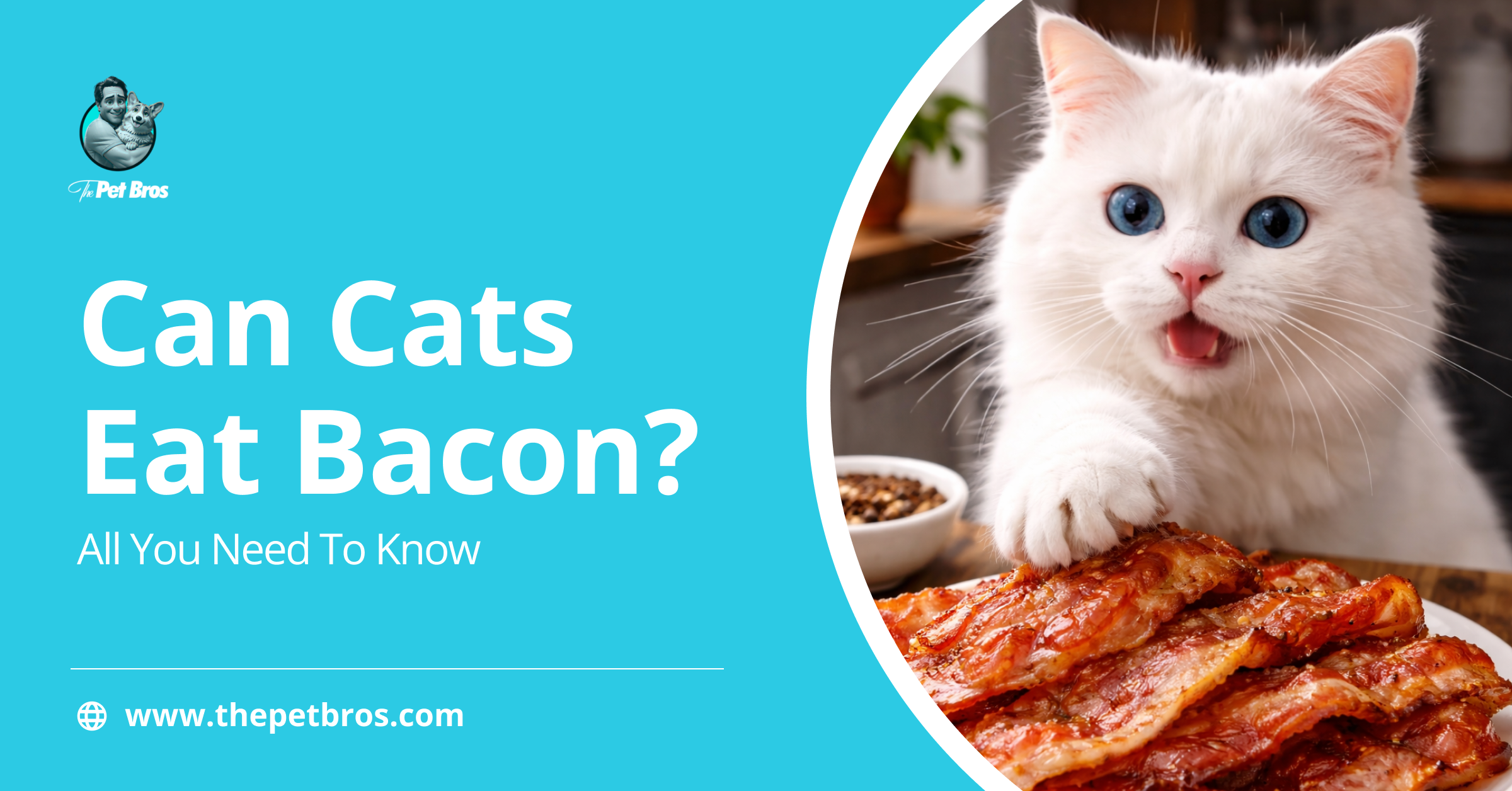
Bacon is a breakfast favourite in many homes and is often enjoyed crispy and hot. But if your cat suddenly appears in the kitchen, drawn in by the smell, you may begin to wonder: Can cats eat bacon?
Although bacon is meat and cats are obligate carnivores, that does not automatically make it safe for cats. While cats can eat some human foods, bacon is not one of the safe options. The way bacon is processed and prepared makes it very different from plain, fresh meat. Understanding the risks is important before offering your cat even a small bite. Let’s break it down in this article.
Can Cats Eat Bacon Safely?
No, bacon is not recommended for cats. Bacon is not toxic in the strict sense. However, it is extremely high in sodium and fat. Feeding cats bacon regularly can cause digestive upset and may lead to serious health problems over time.
Even occasional bites can stress a cat’s digestive system. High-fat foods can trigger long-term health issues. Cats require protein, but it must be lean and unprocessed. Fatty and salty table scraps are not suitable for cats. These foods can stress the digestive system and lead to long-term complications.
Cats are obligate carnivores. They need meat. But they need lean, unprocessed protein, not cured breakfast meat.
Why Bacon Can Be Unsafe for Cats
Bacon may look harmless, but several factors make it risky. Bacon, like other processed meats, contains additives that cats cannot digest easily. Feeding inappropriate foods can lead to future health problems. Some of which are:
1. High Soduim Content
Bacon is cured with salt. Cats require only a small amount of sodium in their diet. Too much salt can cause:
- Excessive thirst
- Vomiting
- Diarrhoea
- Dehydration
In severe cases, high sodium intake can lead to sodium ion poisoning. Even one strip of bacon contains more salt than your cat needs in an entire day. Cats are sensitive to salt levels. Regular exposure can strain the kidneys and overall health.
High salt can also raise blood pressure in cats. Cats may not show immediate symptoms, but damage can occur over time. Fresh, unsalted protein is always safer for their delicate system.
2. Excessive Fat Levels
While cats need fat in their diet, they do not need it in excessive amounts. Too much fat can cause:
- Stomach upset
- Loose stools
- Weight gain
- Pancreatitis
Pancreatitis is a painful inflammation of the pancreas. It can require urgent veterinary care. High-fat foods are one of the common triggers. Excess fat can also affect liver function. Cats digest fat more efficiently from lean meat than processed foods. Feeding high-fat foods can reduce their energy and agility. Balanced fat intake supports healthy energy levels.
3. Harmful Preservatives
Bacon is processed. It often contains nitrates and other curing agents. These additives are safe for humans in regulated amounts. But they are unnecessary for cats. Cats thrive on simple, clean protein sources, like chicken and shrimp.
Processed meats may contain chemicals that stress the liver. Fresh, lean proteins are easier for cats to digest. Preservatives provide no nutritional benefit for felines.
4. Risk of Chronic Disease
Feeding bacon regularly may contribute to long-term issues. High sodium can strain the kidneys. High fat can increase the risk of obesity and heart problems. Cats with kidney disease or heart conditions are especially vulnerable.
Cats need a balanced diet with the right mix of protein, vitamins, and minerals. Feeding them homemade cat food can help ensure those nutritional needs are met. Processed meats like bacon do not meet those standards.
5. Toxic Seasonings
Many bacon varieties contain added flavourings. Some may include garlic or onion powder. Both are toxic to cats. Even small amounts can damage red blood cells.
This is why processed foods are risky. You may not always know what has been added. This is why it is very important to know certain foods your cat should avoid.
What Happens If Your Cat Eats Bacon?
If your cat steals a small piece of bacon, do not panic. A tiny amount will likely cause mild or no symptoms. However, monitor your cat for:
- Vomiting
- Diarrhoea
- Excessive thirst
- Lethargy
- Signs of sodium poisoning
If your cat eats a large quantity or shows severe symptoms, contact your vet immediately. Cats with underlying health issues should be monitored more closely.
Safer Meat Alternatives to Feed Your Cat
Your cat doesn’t need bacon in their diet. You may want to explore safer and healthier alternatives. Instead of processed meat, choose:
- Plain cooked chicken breast
- Lean pork
- Boiled turkey pieces
- Cat-specific protein treats
- Small amounts of cooked fish without bones
Always cook meat thoroughly. Do not add salt, oil, butter, garlic, or spices. Lean proteins provide essential amino acids for cats. Safe foods support healthy digestion and energy levels.
Conclusion
So, can cats eat bacon? While bacon may smell irresistible to your feline, it is not a safe or healthy treat. Bacon is high in salt, fat, and preservatives, which makes it unsuitable for cats. Some varieties also contain garlic or onion seasonings, which are toxic even in small amounts. Cats have sensitive digestive systems. Even foods that seem harmless, such as blueberries, can cause problems if served incorrectly.
Processed meats like bacon pose an even greater risk due to their sodium and fat content. Instead of bacon, choose lean, unprocessed proteins and stick to balanced, cat-appropriate meals and treats. Making safer food choices helps prevent digestive upset, weight gain, and long-term health complications. When it comes to your cat’s diet, it is always better to prioritise safety over temptation.
Can Cats Eat Bacon? FAQs
Can cats eat cooked bacon?
Cooked bacon is not toxic, but it is salty and fatty, so it is not safe for cats and should be avoided.
Can cats eat bacon grease?
No, bacon grease is pure fat and can cause digestive upset or pancreatitis in cats.
Can cats eat bacon one time?
A very small piece once is unlikely to cause serious harm, but it should not become a regular treat.