


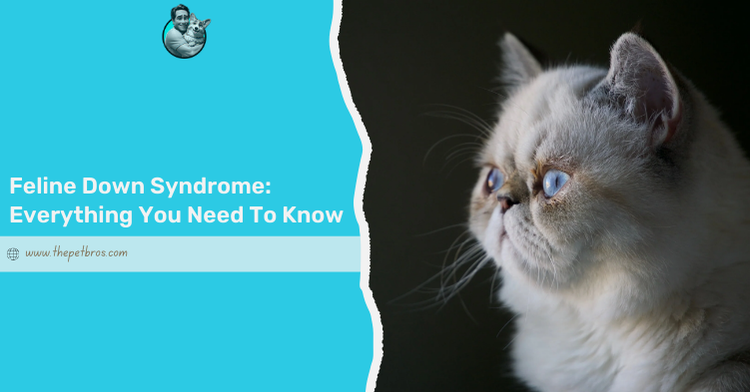
The phrase feline down syndrome appears frequently online, often attached to photos or videos of cats that look or behave differently from what people expect. A slightly flatter face, unusual eye spacing, delayed movement, or awkward coordination can quickly trigger comparisons, especially on social media, where familiar labels help stories travel faster.
These posts spark concern rather than diagnosis among cat parents. They want to understand what is happening to their cat and whether it is something to worry about. The problem is that internet language does not always align with veterinary science. In this article, you will learn what people usually mean when they say feline down syndrome, and how vets assess and support cats with special needs.
What People Mean When They Say Feline Down Syndrome
When people use the term feline down syndrome, they are usually describing a cat that looks or behaves differently from what they consider typical. This often includes facial features such as a flatter nose, wider-set eyes, or an unusually shaped head. Movement differences, learning delays, or coordination issues may also prompt the comparison, especially when seen in videos or photos online.
These comparisons tend to come from visual recognition rather than medical understanding. Humans naturally reach for familiar language when explaining differences, and Down syndrome is widely recognised in human contexts. Applying that label to cats feels intuitive, even though it is scientifically inaccurate.
There is also an emotional element behind the term. Many cat parents use it to express affection, protectiveness, or concern for a cat they perceive as vulnerable.
Can Felines Have Down Syndrome?
No, cats cannot have Down syndrome. In fact, animals cannot have Down syndrome at all. This condition occurs only in humans and is caused by a person being born with an extra copy of chromosome 21. Animals, including cats, do not share this chromosomal structure.
Humans have 23 pairs of chromosomes, while cats have 19. That difference matters. Chromosomal conditions depend on specific genetic arrangements, and those arrangements do not cross species lines. Because of this, veterinarians do not test for or diagnose Down syndrome in cats or any other animals.
What you may be seeing instead are traits linked to other developmental, genetic, or neurological conditions. Recognising this helps you move away from misleading labels and toward understanding what your cat actually needs.
Conditions That Can Look Like Feline Down Syndrome
When people talk about feline down syndrome, they are often reacting to a set of visible symptoms rather than a real diagnosis. These traits resemble what people recognise as symptoms of Down syndrome, but they actually point to other underlying conditions in cats.
- Congenital and genetic abnormalities: Some cats are born with genetic differences that affect physical development. These conditions may cause facial differences, smaller body size, or delayed growth. Symptoms often appear early and remain consistent throughout the cat’s life.
- Craniofacial differences and developmental delays: Abnormal development of the skull or facial bones can change how a cat looks and functions. Cats with these traits may show uneven facial features, difficulty feeding, or slower learning during kittenhood.
- Neurological conditions affecting movement or behaviour: Disorders involving the brain or nervous system can affect balance, coordination, and reflexes. Symptoms may include tremors, awkward gait, or delayed responses to sounds and movements.
- Prenatal factors such as infection or toxin exposure: Exposure to illness, toxins, or poor nutrition during pregnancy can disrupt development. Cats affected this way may show lifelong symptoms linked to both physical structure and behaviour.
Why The Term Persists Online
Feline down syndrome continues to circulate online because the internet thrives on visual stories. A single photo of a cat with an unusual face or clumsy movement can spread quickly, especially when paired with a familiar human label. People often use the term as shorthand, not to diagnose, but to make sense of what they are seeing in a way others will instantly understand.
Online communities also shape how the term is used. In Reddit discussions and comment threads, pet owners often jump in to reassure one another, share personal experiences, or gently correct misinformation. These conversations usually come from a place of care. Cats labelled this way are often healthy, just different, which helps normalise variation rather than stigmatise it.
Personality plays a role, too. Some cats, especially orange cats, already carry a reputation for being quirky, chaotic, or a little unpredictable. When an orange cat behaves in an unusual way, people may be quicker to frame it as something “different” rather than simply part of a wide personality spectrum. Social media blends humour, affection, and misunderstanding, which keeps the term alive even when science tells a different story.
How to Care For Cats With Special Needs
- Create a safe and predictable home environment: Cats with special needs thrive on familiarity. Keep furniture layouts consistent and remove hazards that could cause falls or confusion. A calm, stable space helps reduce stress and supports a happy cat that feels secure as it moves around its home.
- Adjust routines to match your cat’s abilities: Some cats benefit from slower routines or extra time to complete everyday activities. Feeding, play, and rest work best when they follow a predictable rhythm. This consistency helps your cat stay relaxed.
- Support mobility and sensory challenges: Raised food bowls, shallow litter trays, or soft bedding can make daily life easier. Small adjustments go a long way in improving comfort and independence, especially for cats with coordination or vision difficulties.
- Respond to attention-seeking with patience: Cats with special needs may seek attention more often, not out of mischief, but for reassurance. Interaction, reassurance, and positive engagement help strengthen trust and emotional well-being.
- Use guidance, not punishment: Discipline should never involve punishment. Instead, guide behaviour with redirection and positive reinforcement. Cats respond best to understanding, especially when their behaviour reflects physical or neurological differences rather than intent.
- Work closely with your vet: Regular veterinary check-ups help track changes and adjust care as needed. Ongoing support ensures your cat remains comfortable, supported, and able to live a fulfilling life on their own terms.
Conclusion
The term feline down syndrome does not describe a real medical condition, but it does highlight how people try to understand differences using familiar language. While cats cannot have Down syndrome, some do have genetic, congenital, or neurological conditions that affect how they look or behave. Focusing on proper veterinary care and individual needs matters far more than labels.
Feline Down Syndrome FAQs
How do I know if a cat has Down syndrome?
There is no test for Down syndrome in cats, but a vet can assess underlying medical conditions.
Can cats have autism or Down syndrome?
Cats cannot have these human conditions, though neurological differences can exist.
What does a cat look like when it has Down syndrome?
There is no specific appearance, as the term is often used incorrectly to describe unrelated traits.
What are the signs of feline down syndrome?
Cats cannot have Down syndrome, but traits often linked to the term include unusual facial features, delayed development, coordination difficulties, or other medical conditions.