


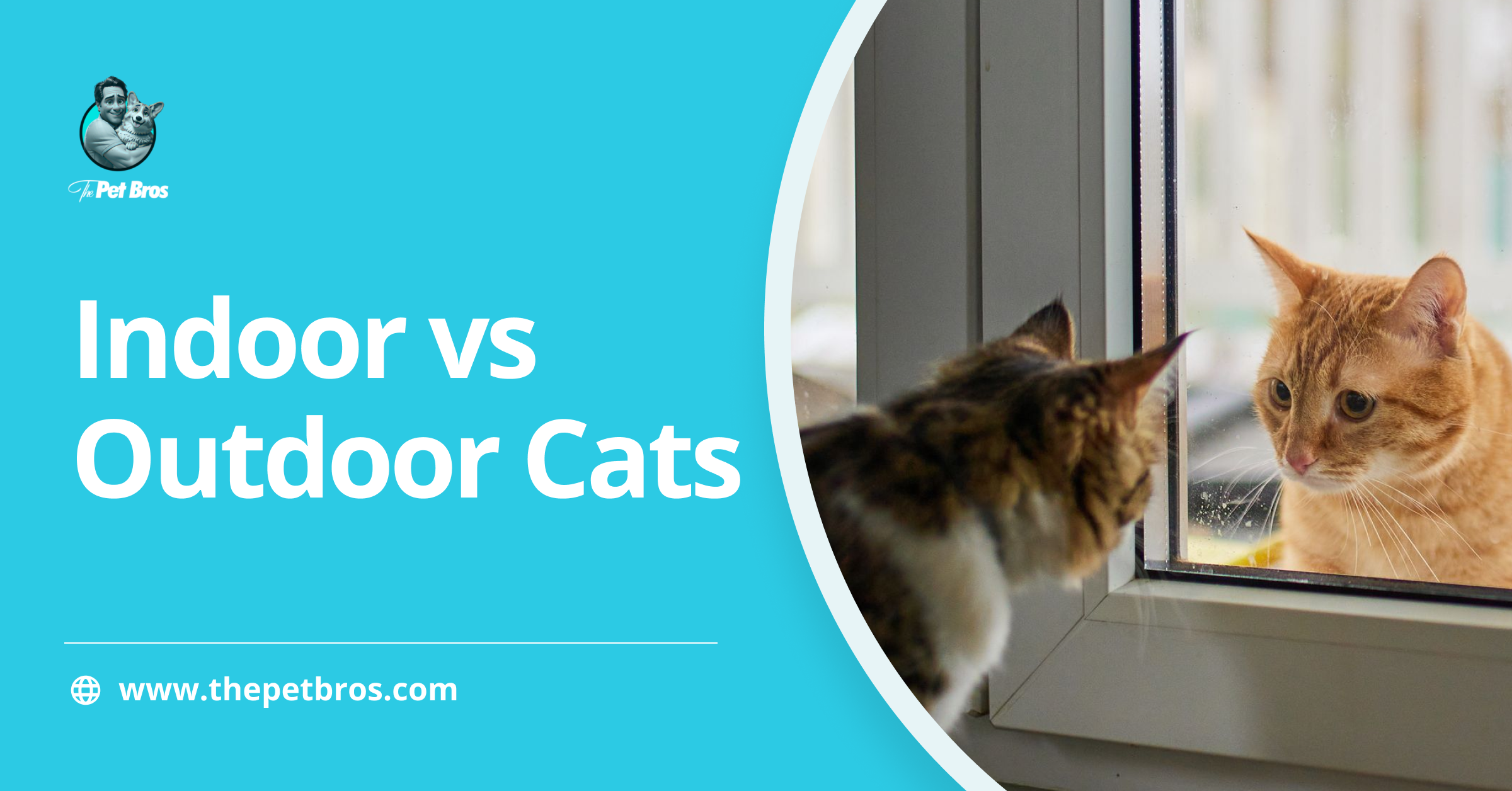
The “Indoor vs outdoor cats” debate often sparks strong opinions among cat parents. Some feel indoor life offers safety and peace. Others believe outdoor access brings freedom and fulfilment. Many people fall somewhere in between, unsure which choice truly serves their cat best.
One cat may seem perfectly happy watching the world from a window. Another will wait by the door, alert and ready, as if something important lies just beyond the door. These small moments raise a bigger question about how cats experience their world.
In this article, we’ll explore how each lifestyle affects health, safety, and overall well-being, helping you understand what each option means for your cat.
What Does “Indoor vs Outdoor Cats” Really Mean?
An indoor cat spends their life inside the home. They eat, sleep, and play indoors, and any stimulation comes from their living space and daily interaction with you. Picture a cat moving between rooms, watching the world from a window, or climbing a cat tree during playtime.
On the other hand, an outdoor cat has regular, unsupervised access to the outdoors. This could mean roaming the neighbourhood, exploring nearby gardens, or leaving the house for long stretches before returning. Outdoor access is part of their normal routine.
Health Differences Between Indoor and Outdoor Cats
Indoor cats live in a more controlled environment. They are less exposed to contagious diseases, parasites, and injuries from other animals. Because their surroundings remain stable, their health risks are often driven more by diet, weight, and activity levels than by outdoor exposure.
Outdoor cats, on the other hand, are exposed to more variables. They may meet other cats, wildlife, standing water, or contaminated surfaces. Veterinary research shows that outdoor cats face a significantly higher risk of infectious diseases such as FIV and FeLV due to contact with other animals. They are also more likely to be exposed to parasites such as fleas and ticks.
This does not mean one lifestyle guarantees illness or perfect health. It simply means the type of risk changes depending on where your cat spends most of its time.
Lifespan: Do Indoor or Outdoor Cats Live Longer?
Lifespan often differs between indoor and outdoor cats, with a clear gap between the two lifestyles.
- Indoor cats commonly live between 10 and 15 years, and many live even longer with good care.
- Outdoor cats often have a much shorter average lifespan, commonly estimated at 2 to 5 years in many regions.
This gap exists because lifespan reflects long-term exposure, not just daily comfort. Cats that spend most of their lives indoors face fewer unpredictable events, while cats that roam outdoors encounter far more variables over time.
Behaviour and Stimulation Needs
| Aspect | Indoor Cats | Outdoor Cats |
|---|---|---|
| Daily stimulation | They rely on their home environment for stimulation. Playtime, toys, climbing spaces, and interaction with people shape their day. Mental engagement largely depends on how the space is configured. | Gain stimulation naturally through their surroundings. Exploring, climbing, hunting behaviours, and reacting to new sights and smells fill much of their time. |
| Expression of natural behaviours | Express behaviours in controlled ways, such as chasing toys, scratching posts, and climbing cat trees. These behaviours need to be encouraged intentionally. | Express behaviours freely through roaming, chasing insects, climbing fences, and interacting with the environment without restriction. |
| Boredom risk | Can become bored if their environment lacks variety or routine interaction. Without enrichment, this may show as restlessness or destructive habits. | Less likely to experience boredom due to constant environmental change, though stimulation levels depend on surroundings. |
| Human Interaction | Often form strong bonds with owners due to shared space and frequent interaction throughout the day. | May appear more independent, as much of their stimulation comes from outside rather than human-led activities. |
| Routine and predictability | Thrive on predictable routines, including feeding times, play sessions, and rest. Structure plays a big role in emotional balance. | Experience less predictable routines, as outdoor conditions influence activity patterns and timing. |
Safety Risks Faced by Outdoor Cats
Outdoor access exposes cats to unpredictable or uncontrollable situations. These risks do not affect every cat in the same way, but they remain common enough to matter.
- Traffic and moving vehicles: Roads pose one of the most serious dangers. Cats do not judge speed or distance the way humans do, and even quiet streets can change quickly. Accidents often happen suddenly, without warning.
- Conflicts with other animals: Outdoor cats may encounter other cats, dogs, or wildlife. Fights can lead to bite wounds and scratches that become infected. Even small injuries can escalate if left unnoticed.
- Exposure to disease and parasites: Contact with unfamiliar animals and environments increases exposure to infectious diseases, fleas, ticks, and worms. These issues can develop quietly before symptoms appear.
- Toxins and harmful substances: Outdoor spaces may contain pesticides, antifreeze, poisonous plants, or spoiled food. Cats explore with their mouths and paws, which increases the risk of accidental ingestion.
- Human-related risks: Not everyone welcomes roaming cats. Some cats are harmed by hostile neighbours, traps, or unintentional exposure to hazardous materials left outside.
- Getting lost or trapped: Cats can wander farther than expected. They may become disoriented, locked in sheds or garages, or unable to find their way home after a disturbance.
Are Indoor Cats Missing Out?
It can feel that way at first, especially when you see a cat watching birds through the window or reacting to sounds outside. But fulfilment does not depend on outdoor access alone. Cats respond more to stimulation, routine, and comfort than to location.
An indoor cat with playtime, climbing space, mental challenges, and regular interaction can feel just as satisfied as a cat that roams outdoors. What matters most is how their needs are met day to day, not whether those experiences happen inside or outside.
Ways to Safely Combine Indoor and Outdoor Living
- Build or install a catio: Create an enclosed outdoor space so your cat can enjoy fresh air without roaming freely.
- Use a harness and lead: Train your cat gradually so you can supervise outdoor time safely.
- Supervise short outdoor sessions: Stay present while your cat explores the garden. Do not leave them unattended.
- Ensure microchipping and ID tags: Update contact details so your cat can return home quickly if they wander.
- Keep vaccinations and parasite prevention up to date: Outdoor exposure increases health risks. Stay proactive.
- Avoid nighttime roaming: Limit outdoor access to daylight hours when visibility is better.
- Secure your garden: Check fences, remove toxic plants, and block escape gaps where possible.
So Should You Let Your Indoor Cat Roam Outside?
There is no single answer that fits every home. The decision between indoor vs outdoor cats depends on your environment, your cat’s temperament, health, behaviour, and how much risk you are willing to manage.
If you live near busy roads, wildlife, or unpredictable surroundings, keeping your cat indoors may offer greater long-term security. If you have safe, controlled outdoor options, such as a secured garden or enclosed space, limited access can work when managed carefully.
What matters most is not whether a cat goes outside, but whether their physical and mental needs are met consistently. A well-stimulated indoor cat can thrive. A carefully supervised outdoor routine can also work.
Indoor vs Outdoor Cats FAQs
Do vets recommend keeping cats indoors?
Many vets recommend indoor living because it reduces exposure to accidents, disease, and injury, especially in busy or high-risk environments.
Do indoor or outdoor cats live longer?
Indoor cats generally live longer than outdoor cats due to fewer environmental risks and more controlled conditions.
Will my cat be ok outside all night?
Leaving a cat outside overnight increases exposure to traffic, predators, weather, and human-related risks. It is generally safer to keep cats indoors at night.
Is it cruel to keep a cat outside at night?
It can be unsafe rather than cruel. Nighttime brings higher risks, and cats left out overnight are more vulnerable to harm.
Is it cruel to keep cats indoors?
Keeping cats indoors is not cruel when their environment meets their needs through play, enrichment, and interaction.
Do cats need to go outside to be happy?
Cats do not need outdoor access to be happy. They need stimulation, routine, and comfort, which can all be provided indoors