


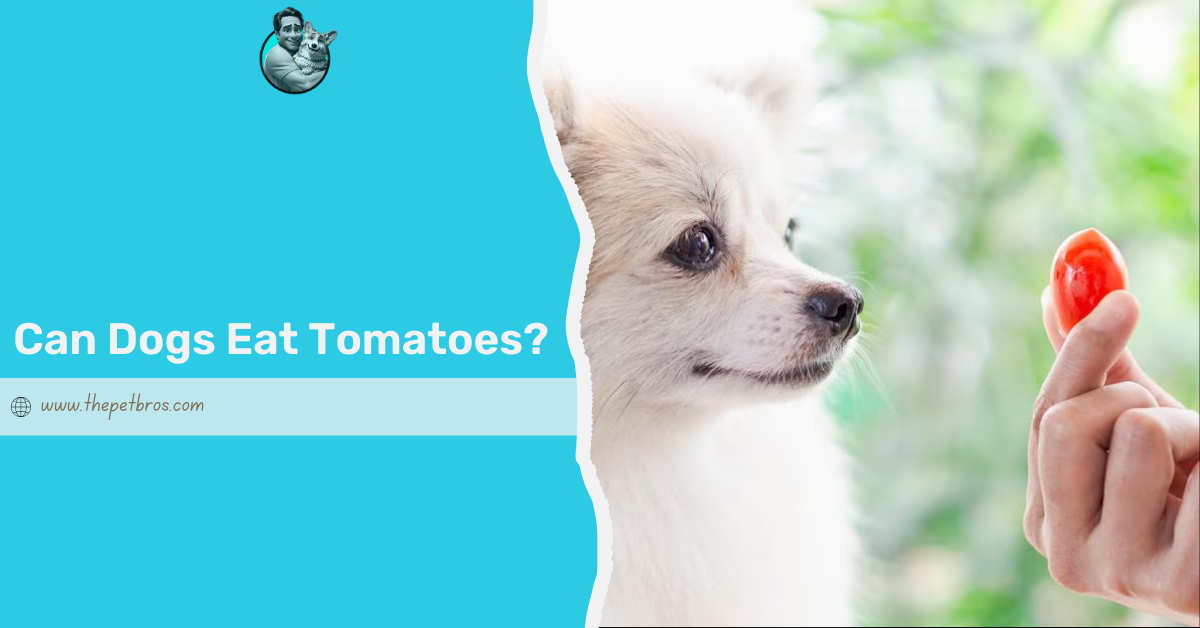
Tomatoes are one of the most common ingredients in our kitchens, with an estimated 180 million tonnes grown globally every year. They pop up in salads, sauces, and snacks, so it’s no surprise that dog owners eventually stop mid-chop and ask, “Wait, can dogs eat tomatoes?”
The answer isn’t as straightforward as fruits like blueberries, apples, watermelon, pumpkins, or other fruits that are straightforwardly safe for dogs. And that’s where things get interesting. This confusion is exacerbated by the fact that tomatoes are sometimes used in commercial dog foods, which leads dog parents to believe they’re always fine. That’s precisely why in this article, you’ll learn whether tomatoes are safe or not, and if they are, how safe are they, when are tomatoes safe for your dog, and when are they not.
Can Dogs Eat Tomatoes? And Is It Safe?
Ripe, bright red tomatoes are generally safe for most dogs to enjoy as an occasional treat. But the safety stops there. The real problem starts when your dog proceeds to the green parts of the plant.
Stems, leaves and unripe tomatoes contain higher levels of tomatine, a natural chemical that can upset your dog’s system if they eat too much of it. That’s why dogs should only ever have the soft, ripe part and never anything from the plant itself.
Interestingly, most dogs handle tomatoes perfectly well. However, just like humans, every dog is different. Some pups have sensitive stomachs, and a few may even have mild food sensitivities that show up when trying new fruits or veggies. If your dog has a history of reactions or you’ve noticed itchiness, coughing, or changes in behaviour after certain foods, a quick chat with your vet about allergy testing can give you clarity. It’s a simple step that helps you avoid foods that don’t sit well with your pet.
Why Tomatoes Can Be Risky For Your Dog
Here’s 6 main factors that make tomatoes risky for dogs:
- Green tomatoes contain tomatine, a compound that can upset your dog’s stomach.
- Stems, leaves, and vines have the highest tomatine levels, so dogs should never chew or swallow them.
- Too much tomato (even ripe) can cause digestive issues in sensitive dogs.
- Puppies and miniature breeds are at greater risk because it takes less tomatine to affect them.
- Dogs with existing stomach problems like acid reflux or chronic gastroenteritis may react more strongly to tomatoes.
- Allergic reactions, though rare, can happen, so watch for itching, swelling or unusual behaviour after your dog tries a new food.
Symptoms of Tomatine Poisoning in Dogs
If a dog eats too many green tomatoes or chews on the stems and leaves, they may show signs of tomatine poisoning. It’s rare, but it does happen, especially with dogs who like to wander through gardens or sneak bites of plants.
Common symptoms of tomatine poisoning in dogs include: :
- Loss of coordination
- Vomiting or diarrhoea
- Excessive drooling
- Tremors or seizures
- Weakness or unusual tiredness
- Dilated pupils
- Abnormal heart rate
- Abdominal discomfort
How to Safely Feed Tomatoes to Dogs
If your dog enjoys the taste of tomatoes, there are a few simple steps to keep things safe and stress-free. Tomatoes can be a fun little treat, but like any new food, preparation matters more than the portion.
Here’s how to serve them safely:
- Choose only ripe, bright red tomatoes, as these contain far less tomatine.
- Remove all stems, leaves, and green bits before serving.
- Wash the tomato thoroughly to remove any dirt or pesticides.
- Cut it into bite-sized pieces to avoid choking, especially for small breeds.
- Start with one small piece to see how your dog reacts.
- Avoid giving tomatoes to dogs with acid reflux, chronic stomach issues, or tomato allergies.
- Keep an eye out for itching, coughing, or digestive upset if your dog is trying tomatoes for the first time.
How Many Tomatoes Can a Dog Eat?
| Dog Size | Weight Range | Safe Serving Size | How Often | Notes |
|---|---|---|---|---|
| Extra-small dogs | 2–10 lbs | 1 small piece (½-inch cube) | 2–3 times per week | Start slowly and monitor for digestive upset. |
| Small dogs | 11–20 lbs | 2 pieces | 2–3 times per week | Ideal as an occasional treat only. |
| Medium dogs | 21–50 lbs | 3 pieces | 2–3 times per week | Watch for signs of acidity or discomfort. |
| Large dogs | 51–90 lbs | 4 pieces | 2–3 times per week | Introduce gradually if your dog is new to tomatoes. |
| Extra-large dogs | 91+ lbs | 5 pieces | 2–3 times per week | Keep under 10 percent of daily treat allowance. |
Tomato Products Dogs Should Never Eat
Not all tomato-based foods are safe for dogs, even though ripe tomatoes themselves are fine in small amounts. Many sauces, soups, and canned tomatoes contain ingredients that cause far more harm than the tomatoes ever could. Garlic and onions are the biggest red flags, and they’re found in almost every pasta sauce, pizza sauce, and ready-made soup.
These ingredients are toxic to dogs, even in small quantities, and can damage their red blood cells. Canned tomatoes and jarred sauces are often high in salt, preservatives, and added sugars, which can upset your dog’s stomach or contribute to dehydration.
Even homemade tomato dishes can be tricky if you season them heavily. Dogs are far more sensitive to herbs, oils, and spices than we are, so even a small amount of seasoned sauce can cause discomfort.
Conclusion
Tomatoes may be a kitchen staple for us, but they’re a treat that requires a little extra care when sharing with your dog. Ripe pieces can be safe and refreshing, while green tomatoes and plant parts should always be avoided.
So, can dogs eat tomatoes? Yes, but only when you serve the right parts in the right way. With a bit of caution and good preparation, tomatoes can stay an occasional treat rather than a risky snack.
Can Dogs Eat Tomatoes? FAQs
What foods are toxic to dogs?
Foods like chocolate, grapes, raisins, onions, garlic, xylitol, and alcohol are toxic and should always be avoided.
Can dogs eat cucumbers or tomatoes?
Dogs can eat cucumbers and small amounts of ripe tomatoes, but never green tomatoes or tomato plant parts.
What vegetables can dogs eat?
Many dogs enjoy safe veggies such as carrots, green beans, cucumbers, broccoli, and peas in moderation.
Can dogs eat tomato sauce?
No, dogs should not eat tomato sauce because it usually contains salt, garlic, onions and other harmful ingredients.
Can dogs eat tomatoes and lettuce?
Dogs can eat ripe tomatoes and plain lettuce together, but keep portions small and avoid any dressings or seasonings.
Can dogs eat tomatoes and cucumbers?
Yes, dogs can have ripe tomatoes and cucumbers in small amounts, as long as the tomatoes are prepared safely.wezx