


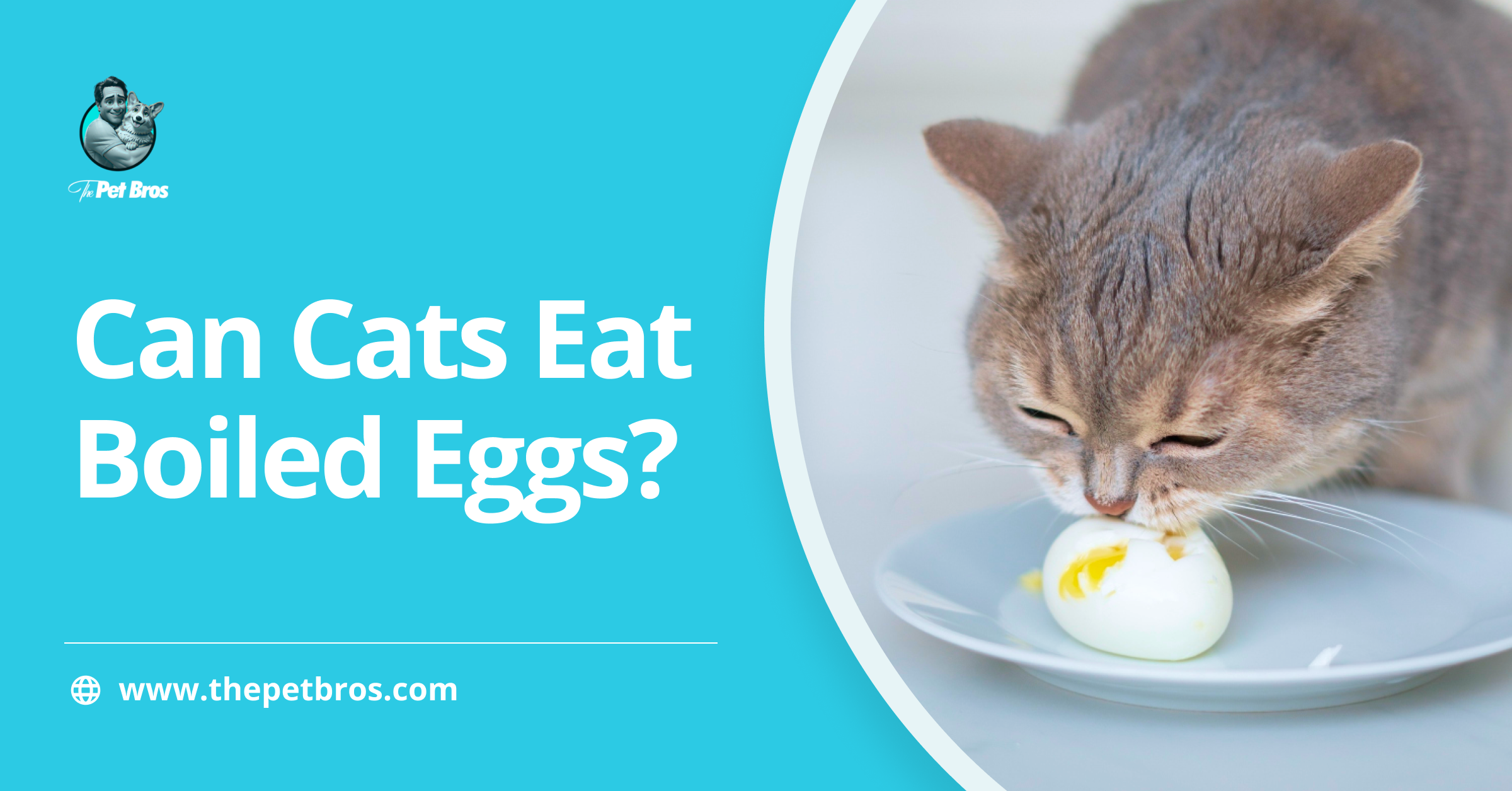
Can cats eat boiled eggs, or is this one of those foods that should stay firmly on your plate? Eggs are familiar. They land on breakfast plates perfectly, and sometimes, they attract a curious cat who is interested in what you are eating. That moment alone is enough to raise questions.
Eggs are rich in nutrients; they seem harmless. But cats do not eat like humans, and what is healthy for us is not always healthy for them. This is why you need to understand where boiled eggs fit in your cat’s diet before offering even a small bit.
Can Cats Eat Boiled Eggs Safely?
Yes, cats can eat boiled eggs, but only in small amounts. Fully cooked eggs are safe for most healthy cats when served plain and occasionally
Boiling is important because heat kills bacteria that raw eggs may carry. Cooking also reduces avidin, a protein found in raw egg whites that interferes with biotin absorption. Once cooked, eggs become easier for cats to digest.
Portion size makes the difference. A 10-pound cat needs about 250 calories per day, while one large egg contains roughly 70 calories. That means even a small serving can add up quickly. For this reason, boiled eggs should stay within 10 percent of daily calories and never replace balanced cat food
Why Cats Are Interested in Boiled Eggs
Cats often show interest in boiled eggs because of their smell and texture. Eggs release a strong protein scent, which naturally attracts a carnivore. The soft texture can also make eggs feel easy to eat, even if the cat does not truly need them.
In many cases, curiosity plays a bigger role than preference. Cats notice what their owners eat and may investigate simply because it feels both familiar and new.
Nutritional Value of Boiled Eggs for Cats
Boiled eggs offer nutrients that align with a cat’s carnivorous nature, but they do not cover everything a cat needs. Think of them as a small nutritional boost, not a foundation.
Eggs provide high-quality protein, which supports muscle maintenance and everyday energy. The yolk adds fats that increase calorie content, so moderation remains important. While eggs contain useful nutrients, they lack the balance found in complete cat food.
Key nutrients found in boiled eggs include:
- Protein to support muscle strength and repair
- Amino acids, including taurine, which cats rely on for normal body function
- Healthy fats from the yolk that raise energy intake quickly
- Vitamins such as A, B12, and D that support general well-being
- Minerals like iron and selenium in small amounts
How Much Boiled Egg Can Cats Eat?
| Cat Size | Recommended Amount | How Often | Why This Matters |
|---|---|---|---|
| Small cats | A few small bites | Occasionally | Keeps calories low and avoids stomach upset |
| Average adult cats | About 1–2 teaspoons | Once in a while | Prevents eggs from replacing balanced food |
| Large cats | Up to 1 tablespoon | Occasionally | Helps control fat and calorie intake |
| Kittens | Very small taste only | Rarely | Their diets need to stay tightly balanced |
Can Cats Eat Raw Eggs?
No, cats should not eat raw eggs. Raw eggs can upset a cat’s stomach and increase the risk of vomiting or diarrhoea. Some cats react quickly after eating raw egg, especially those with sensitive digestion.
Raw egg whites also interfere with how cats absorb certain nutrients, which can worsen stomach discomfort over time. Cooking eggs removes these risks and makes them easier for cats to tolerate.
Can Cats Eat Boiled Eggs With The Shell?
Cats should not eat boiled eggs with the shell intact. Eggshells are hard and uneven, which makes them difficult to chew and easy to choke on. They can also irritate the digestive tract and lead to stomach upset.
Even though eggshells contain calcium, cats do not need them in this form. It is safer to remove the shell completely and offer only the boiled egg, in small portions.
Can Kittens Eat Boiled Eggs?
Yes, kittens can eat boiled eggs in very small amounts, but eggs should never replace proper kitten food. Kittens need a carefully balanced diet to support growth, bone development, and energy.
Because their stomachs are more sensitive, even a small amount of egg can sometimes lead to your cat throwing up if introduced too quickly. If you offer a boiled egg, keep the portion tiny and monitor how your kitten reacts.
Is It OK to Mix Eggs With Cat Food?
Yes, you can mix a small amount of boiled egg with your cat’s regular food, but it should stay occasional and controlled. We’ve already mentioned that eggs can add extra protein to your cat’s diet, but you should also know that they should never dilute or replace a complete and balanced diet.
Whenever you want to mix eggs with your cat’s food, keep these points in mind:
- Use only fully cooked eggs with no salt, oil, butter, or seasoning.
- Add only a small portion, such as a teaspoon, for an average adult cat.
- Mix thoroughly so your cat does not eat only the egg and ignore the rest of the meal.
- Watch for allergic reactions, such as itching, skin irritation, vomiting, or diarrhoea. Some cats may develop food sensitivities over time.
- Stop immediately if you notice loose stools or behavioural changes after eating.
Conclusion
So, can cats eat boiled eggs? Yes, they can, but only when eggs are fully cooked, served plain, and offered in small amounts. Boiled eggs can add variety and protein, but they should remain an occasional treat rather than a regular part of meals.
Cats thrive on complete, balanced diets. Eggs work best as a supplement, not a substitute. Paying attention to portion size and your cat’s reaction helps you decide whether boiled eggs belong in their routine at all.
Can Cats Eat Boiled Eggs? FAQs
Can cats eat rice?
Cats can eat plain, cooked rice in small amounts, but it offers little nutritional value. It should only be used occasionally and never replace proper cat food.
What are things cats can’t eat?
Cats should avoid foods like onions, garlic, chocolate, grapes, raisins, alcohol, caffeine, and heavily seasoned or fatty human foods.
Why does my cat like hard boiled eggs?
Cats often like the smell and texture of boiled eggs. The protein scent attracts them, even though eggs are not essential to their diet.
Can cats eat raw eggs?
No. Raw eggs can cause stomach upset, increase the risk of throwing up, and interfere with nutrient absorption.
Can cats eat boiled eggs with shell?
No. Eggshells can be hard to chew and may cause choking or digestive irritation. Always remove the shell.
Can kittens eat boiled eggs?
Kittens can eat very small amounts of boiled egg, but their diet should mainly come from kitten-specific food. Eggs can sometimes cause throwing up in young kittens.
Can cats eat boiled eggs raw or cooked?
Cats should only eat eggs when they are fully cooked. Raw eggs are not safe and should be avoided.