


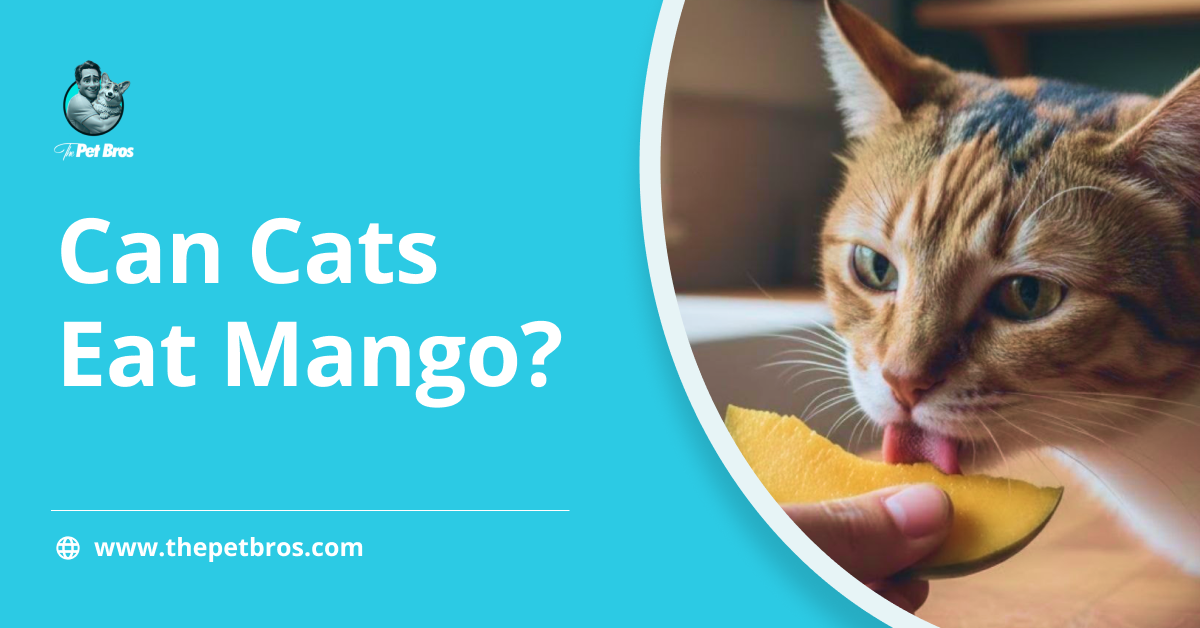
Can cats eat mango, or does this colourful fruit belong nowhere near a cat’s bowl? Mango looks harmless; it smells sweet, looks soft, and when you cut it open, curious eyes often appear from nowhere. Your cats notice patterns, they notice routines, and they definitely notice food.
But cats do not eat the way people do. Their bodies follow different rules. The food we eat is not always safe for them.
Before sharing even a small bite, you need to know what mango really means for a cat and where the line should be drawn.
Can Cats Eat Mango Safely?
Yes, cats can eat mango, but only in very small amounts. A tiny piece given occasionally will not harm most healthy cats. That said, mango does not improve a cat’s health or diet in any meaningful way. Cats already meet their nutritional needs through complete cat food. Mango simply sits outside that requirement.
Cats are obligate carnivores. Approximately 90 percent of their diet should come from animal-based protein. Fruit does not support that need. Mango contains natural sugar, and cats process sugar poorly compared to humans. Even a few extra calories can add up in a small body.
This is why mango should never become a routine treat. It is safe, but unnecessary. When offered, it should stay rare and minimal.
Potential benefits of mango:
- Contains fibre, which may slightly support digestion
- Provides vitamin C, though cats already produce their own
- Includes antioxidants, with no proven added benefit for cats
Why Mango Is Different for Cats
Cats digest food very differently from humans. Their bodies are designed for animal protein, not fruit.
Unlike people, cats do not use carbohydrates as a primary energy source. They rely on protein and fat from meat to stay healthy. Mango contains natural sugars and plant fibre that offer no real nutritional value to a cat. Their bodies simply do not need it.
This is what makes mango different. It is not toxic, but it does not support a cat’s biological needs either.
If you want to offer something extra, stick to foods that align with a cat’s natural diet, such as:
- Chicken
- Turkey
- Cooked fish
- Homemade cat food recipes
- High-quality commercial cat treats made with real meat
Which Parts of Mango Are Safe for Cats
Only the flesh of a mango is safe for cats to eat.
Even then, the amount should stay very small. Mango flesh is soft and easy to swallow, but again, it adds no value to a cat’s diet. A tiny taste is enough to satisfy curiosity without overloading the stomach.
Mango Parts Cats Should Never Eat
Cats should never eat the following parts of a mango:
- Mango skin: Tough and difficult to digest. It can irritate the stomach and cause discomfort.
- Mango pit: Hard and dangerous. It poses a choking risk and can splinter if chewed.
- Mango tree, leaves, or bark: Not safe for cats and should be kept completely out of reach.
Keeping these parts away helps avoid unnecessary risks.
Can Cats Eat Dried or Processed Mango
Cats should not eat dried or processed mango. Drying mango increases its sugar concentration and often introduces preservatives or additives. The texture also becomes tougher, which raises the risk of choking or digestive upset. Even small amounts can be too much for a cat’s system.
Fresh mango flesh is the only form that is ever considered safe, and even then, it should be offered rarely and in tiny portions.
Health Considerations When Feeding Mango
Before offering mango, it helps to understand how a cat’s body may react. These are the key health considerations to keep in mind:
- Digestive upset: Mango contains fibre and natural sugar. Some cats may experience loose stools or vomiting after eating it, especially if the portion is too large.
- Weight gain risk: Cats require far fewer calories than humans. Even small amounts of sugary fruit can contribute to gradual weight gain over time.
- Blood sugar concerns: Mango is not suitable for cats with diabetes or blood sugar issues. Sugar intake should remain tightly controlled in these cases.
- Allergic reactions: While rare, some cats may react poorly to new foods. Signs may include itching, discomfort, or changes in behaviour.
- Choking or swallowing issues: Large or uneven pieces can be difficult for cats to manage. This increases the risk of gagging or choking.
What Fruits Are Unsafe for Cats
Not all fruits are safe for cats. Some can cause serious health issues even in small amounts.
- Grapes and raisins: These can trigger severe reactions and may lead to kidney failure in cats.
- Citrus fruits: Fruits like oranges, lemons, and limes contain compounds that irritate the digestive system and nervous system.
- Cherries: The pits and plant parts contain substances that are toxic to cats and pose a choking risk.
- Avocado: Avocado contains persin, which cats struggle to tolerate and should be avoided entirely.
When it comes to fruit, if there is any uncertainty, it is always safer not to offer it at all.
When to Stop Feeding Your Cat Mango
Stop feeding mango as soon as your cat shows any negative reaction. This includes vomiting, diarrhoea, bloating, or signs of stomach discomfort. Changes in behaviour, such as lethargy or loss of appetite, also matter and should not be ignored.
Mango should also be avoided completely if your cat is overweight, has diabetes, or has a sensitive digestive system. In these cases, even small amounts can cause more harm than good.
If mango causes any issue at all, remove it from your cat’s diet and stick to their regular food. There is no need to reintroduce it.
Conclusion
So, can cats eat mango? Yes, but only in very small amounts and only on rare occasions.
Fresh mango flesh is not toxic, but it is not necessary for a cat’s diet. Cats do best on meat-based nutrition, and fruit adds no real benefit. Anything beyond a tiny taste can lead to digestive upset or unwanted weight gain.
If mango is offered at all, it should stay minimal, plain, and infrequent. For most cats, sticking to their regular food remains the safest and healthiest choice.
Can Cats Eat Mango? FAQs
What fruits can cats not eat?
Cats should avoid grapes, raisins, citrus fruits, cherries, and avocado.
Is mango toxic to pets?
Mango flesh is not toxic, but the skin, pit, and tree parts are unsafe.
Do cats like the taste of mango?
Most cats cannot taste sweetness, so interest varies.
Can cats eat mango fruit?
Yes, but only fresh mango flesh and only occasionally.
Can cats eat mango skin?
No, mango skin should never be fed to cats.
Can cats eat dried mango?
No, dried mango contains concentrated sugar and additives.
Can cats eat mango tree?
No, mango leaves, bark, and stems are unsafe.