


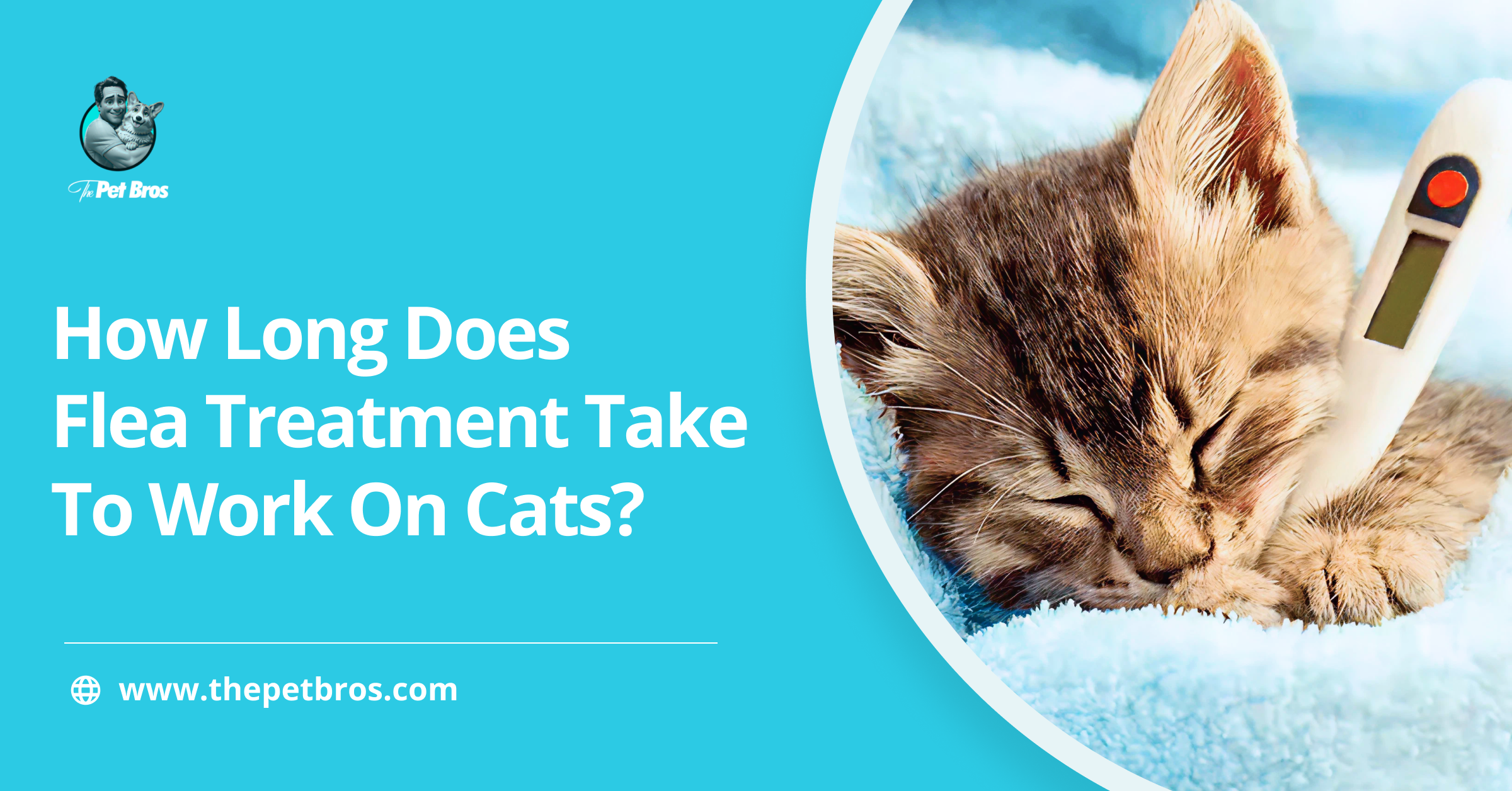
Once you’ve spotted the signs and symptoms of fleas on your cat or in your home, your first instinct is to reach for the strongest treatment available to get them some relief. But after you’ve applied a natural remedy or a medical flea care plan, a frustrating question usually follows: how long does flea treatment take to work on cats?
Understanding the flea life cycle clarifies what flea treatment actually does, how quickly it should work, and when ongoing itching may signal a persistent infestation. This article has all that you need to know!
How Long Does Flea Treatment Take To Work On Cats, Really?
The time it takes to see results depends entirely on the treatment you choose.
For oral tablets, once your cat swallows the pill, the medicine enters the bloodstream almost immediately. These tablets often start killing adult fleas within 30 minutes. So, you will likely see most fleas die within six hours.
The spot-on topicals take 12 to 24 hours to work because the liquid must spread through the natural oils on your cat’s skin. While they start slower than pills, topicals provide the best long-term value by killing new fleas for an entire month.
Flea collars and injections focus more on long-term protection. A collar often takes 48 hours to reach full strength. Injections, which a vet administers, work over several months to prevent new infestations rather than killing every flea instantly.
Herbal flea treatments have a completely different timeline, too.
Why Is My Cat Still Scratching?
Continued scratching does not mean the medicine failed; instead, it proves the neurotoxins are starting to target the flea’s nervous system. These chemicals overstimulate the flea’s nerves and trigger a burst of uncontrolled energy called hyperactivity.
During this phase, the flea loses coordination and bites or twitches frantically as it dies. This death dance, the flea’s frantic movement, drives it across your cat’s skin and triggers the extra scratching during the first few hours.
New fleas often appear a week later because most medicines only kill the adults, leaving the hidden eggs and babies alone. While you killed the adults on your cat, they represent only 5% of the total infestation. The remaining 95% includes eggs, larvae, and pupae hiding in your carpets, furniture, and floor cracks where they continue to hatch.
New arrivals from the environment cause these sightings. Flea pupae stay protected inside tough, sticky cocoons that resist household sprays. These cocoons sense the heat or vibrations of a passing cat, causing new adults to hatch and jump onto your pet instantly.
Owners also track eggs inside on their own shoes and clothes. Because flea eggs roll off fur like tiny grains of salt, you can easily pick them up outdoors or at a friend’s house. Once you step inside, you drop these eggs onto your rugs and fuel the cycle.
3 Factors That Slow Down Treatment
- Bathing your cat too soon: Most topical medicines need 48 hours to merge with the natural oils on your cat’s skin. Washing your cat during this window sends the active ingredients down the drain and leaves your pet unprotected.
- Incomplete dosage: This occurs when a cat spits out a pill or when the liquid sits on the hair instead of the skin. These missing amounts keep the chemicals from reaching a lethal level in the flea’s system. You must part the fur until you see skin to ensure the medicine absorbs properly.
- Large infestations: Months of flea activity build a massive volume of pupae that easily overwhelms a single pet’s treatment. You will only see a clear house once you combine medication with deep cleaning to physically remove the population.
Timeline Checklist for Owners
| Timeframe | What Is Happening | Success Signal |
|---|---|---|
| 30 Mins – 4 Hours | Medicine enters the flea’s nervous system. | You see fleas jumping or twitching. |
| 24 Hours | Most adult fleas on the cat die. | Your cat stops frantic scratching. |
| 7 – 14 Days | New fleas hatch from the carpet and jump on. | You see a few “new” small fleas. |
| 30 Days | First month of protection ends. | You apply the next dose to break the cycle. |
| 90 Days | The home environment clears completely. |
When to Call the Vet
Contact your veterinarian if you notice any of these signs.
- Red, oozing hot spots or open sores that refuse to heal.
- Pale gums and unusual weakness or lethargy.
- Severe swelling or large patches of missing hair.
- Small, white, rice-like segments near the tail or in the stool.
Wrap-Up
The road to a flea-free cat isn’t always an overnight journey. While the answer to how long does flea treatment take to work on cats can be as short as thirty minutes for some oral medications, the reality of a full household infestation is a three-month battle against the life cycle. Seeing a stray flea a few days after treatment doesn’t necessarily mean the product has failed; it often just means the environment is still clearing out.
How Long Does Flea Treatment Take To Work On Cats? FAQs
How long after flea treatment will a cat feel better?
Most cats find relief within 12 to 24 hours as the adult fleas perish, although temporary scratching may increase in the first few hours as the dying fleas become hyperactive.
What immediately kills fleas on cats?
Oral tablets like nitenpyram begin killing adult fleas within 30 minutes.
How quickly does flea medicine work for cats?
Oral pills start working within 30 minutes, while topical liquids usually take 12 to 24 hours to spread. Both methods effectively kill the current adult population within the first full day.
How long does flea treatment take to work in the house?
Clearing a home takes 30 to 90 days to exhaust the supply of eggs and larvae in the environment.