


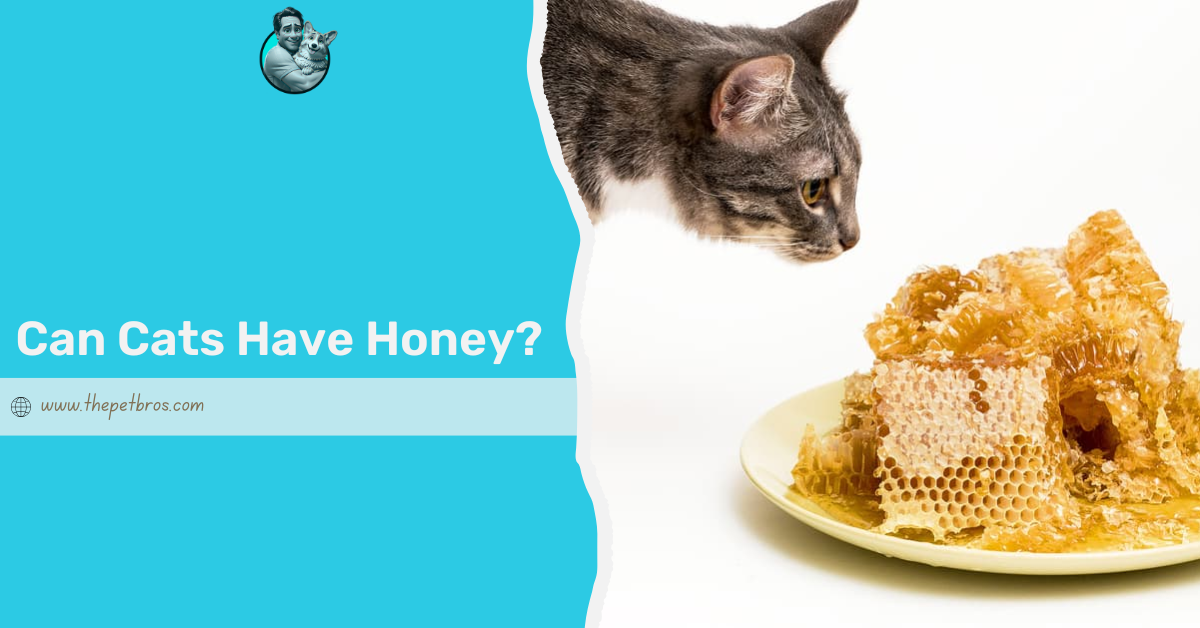
If you have ever made a cup of tea with honey and felt a pair of eyes watching you from across the room, you already know how nosy cats can be. They like to inspect everything we touch. This is the question, “Can cats have honey?”, that becomes your reality.
Cats explore food with their noses, not their taste buds. They cannot taste sweetness at all, so the interest they show is rarely about flavour. It is more about their favourite human paying attention to something, and they want to be involved. This is why you should consider how differently their bodies process human foods.
This article explains the benefits, risks, and safest approach to honey so you can make the best choice for your cat’s well-being.
Can Cats Have Honey Safely?
Cats can have honey, but only in very tiny amounts and only under the right circumstances. Honey is not toxic, but it still poses risks because cats are not designed to process sugary foods. Their digestive system works best with high-protein meals, so anything sweet can easily upset their stomach.
If your cat has a history of food sensitivities or you suspect allergies, this is a good time to remember that some owners conduct allergy testing before introducing new foods. You do not need it for every cat, but it helps identify pets that are more vulnerable to stomach upset or immune reactions. Even the tiniest drop of honey can be too much for a sensitive cat.
Also, honey should never be part of your cat’s daily routine. At most, offer it only as an occasional treat and handle it with care.
Why Is Honey Not Ideal For Cats
Recent studies have confirmed that cats cannot process fructose and glucose efficiently. What this means is that even a small amount of honey can place unnecessary strain on their stomachs. Too much sugar can quickly lead to vomiting, diarrhoea, bloating, or general discomfort. Moreover, cats do not have the enzymes needed to break down sugary foods in the same way humans do.
Another issue is the type of honey found in most kitchens. Many store-bought honeys are heavily processed or mixed with syrups and additives that offer no benefits to cats. These versions can irritate the stomach even more, making them an unwise choice for pets with sensitive digestion or underlying health issues.
Even when honey is natural, it still doesn’t provide the nutrients cats need. According to the National Academies Press, a cat’s body thrives on six main nutrients: animal protein, fats, vitamins, water, amino acids, and minerals; honey supplies none of these. This is why honey is rarely helpful and often unnecessary in a cat’s diet, especially when safer foods appropriate for cats are available.
3 Possible Benefits of Honey For Cats
Although honey is generally not necessary for cats, there are a few instances when it may offer mild benefits when used very sparingly. Note that these cases are rare and should always be guided by a vet.
- Natural Antibacterial Properties: Raw or manuka honey contains natural antibacterial and antioxidant compounds. These qualities make it useful in vet-supervised wound care, where a veterinarian may apply honey topically to help support healing. This benefit does not come from eating honey, but from its protective properties on the skin.
- Occasional Immune Support: Some owners use tiny amounts of raw honey as a temporary immune boost, especially during seasonal changes. Natural pet care communities often promote this practice, but research has not proven it safe or effective for cats. At best, it may offer a mild soothing effect, but it should never replace proper veterinary treatment.
- Gentle Support During Minor Irritation: In rare cases, give a tiny taste of honey to help soothe the throat or mouth, but only with professional advice, as cats rarely develop sore throats and may react poorly to sticky textures. If your cat has allergies or sensitivities, this step can easily do more harm than good.
When Should You Not Feed Your Cat Honey?
No matter how interested they appear or how closely they follow you around the kitchen, hoping for a taste, there are times you have to stand your ground and make sure honey doesn’t go anywhere near your cat’s plate.
Kittens are the first group to avoid giving honey to. Their immune systems are still developing, making them far more vulnerable to bacteria or spores sometimes found in honey; even a tiny amount can cause serious illness.
Honey is also unsafe for cats with underlying health conditions. Those with diabetes, obesity, or sensitive digestion can experience immediate problems because of the sugar content. Cats recovering from infections, including respiratory illnesses such as pneumonia, should avoid honey entirely as their bodies are already under extra strain.
Even healthy adult cats should only consume a very small amount, since their bodies are not designed to digest sugary foods. A larger portion can easily trigger vomiting, diarrhoea, or bloating, making honey a risky option in many everyday situations.
Now, How Do You Safely Feed Your Cat Honey?
If your vet agrees, introduce a tiny amount of honey to your cat carefully and in a controlled way. We’ve already established that cats cannot process sugar well, so the goal is to offer the smallest possible amount of sugar while keeping things safe, simple, and gentle on their stomachs.
- Use only raw or manuka honey.
- Offer no more than half a teaspoon.
- Never mix honey with sugary or processed snacks.
- Watch for vomiting, diarrhoea, or discomfort after eating.
- Avoid giving honey to kittens or cats with medical conditions.
- Speak to your vet before using honey for any reason.
Conclusion
So, can cats have honey safely? Only in very tiny amounts and only when your vet agrees it is appropriate. Honey is not necessary for a cat’s diet and can easily upset their stomach, especially if they have health issues or sensitive digestion. Some cats may tolerate a small taste, but safer, cat-friendly treats will always be the better choice.
Can Cats Have Honey? FAQs
Can honey kill cats?
Honey is not toxic, but it can be dangerous for kittens or cats with weak immune systems due to bacteria or spores.
Can cats have cooked honey?
Cooked or processed honey loses most beneficial properties and is not recommended.
Can cats have honey ham?
Honey ham contains salt, sugars, and seasonings that are unsafe for cats. Avoid it.
Can cats have raw honey?
Raw honey may be safer than processed honey, but it should still only be given in tiny amounts with vet approval.
Can cats have honey for allergies?
There is no proven benefit of honey for cat allergies. Risks often outweigh potential benefits.
Can cats have honey for a sore throat?
Cats rarely develop sore throats, and honey is not recommended as a treatment.