


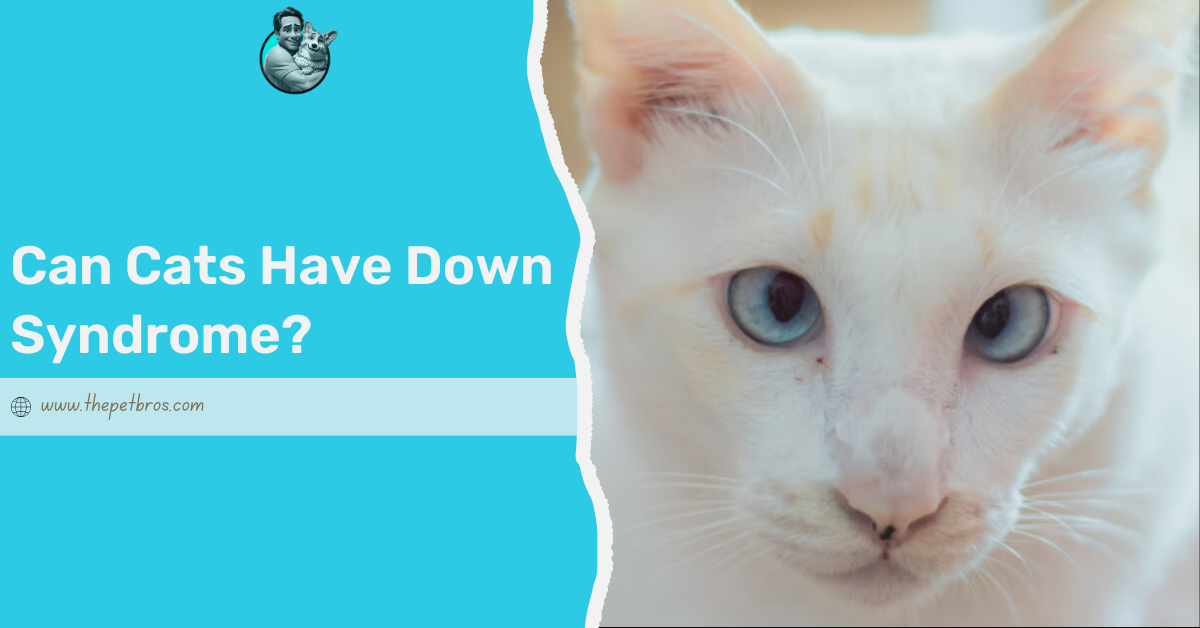
Can cats have Down syndrome, or is the idea of a cat with Down syndrome a misunderstanding shaped by appearance alone? Cats have become one of the most photographed animals online, and images of cats with flat faces, wide-set eyes, or unusual movement often spark this question.
Globally, there are over 220 million domestic cats, and natural variation in genetics means not all cats look or behave the same. In humans, Down syndrome affects roughly 1 in every 700 births due to a specific chromosomal difference, but feline genetics work very differently.
This article explains whether cats can have Down syndrome, why some cats are mistakenly described this way, and what medical or developmental conditions may actually be responsible when a cat looks or behaves differently.
Can Cats Have Down Syndrome?
No, cats cannot have Down syndrome. Down syndrome is a human genetic condition caused by an extra copy of chromosome 21, and cats simply do not have this chromosome. Humans have 23 pairs of chromosomes, while cats have 19 pairs, and none of them function in the same way as human chromosome 21. Because of this fundamental genetic difference, a cat cannot develop Down syndrome in the medical sense. In fact, no animal can have down syndrome.
When people think a cat has Down syndrome, they are usually referring to a cat with unusual physical features or developmental challenges, not an actual chromosomal condition. While the comparison is common online, it is not scientifically accurate.
Understanding this distinction is important, as it helps you, as a cat parent, focus on the real medical or developmental causes behind a cat’s behaviour or appearance rather than relying on an incorrect label.
5 Conditions That Can Be Mistaken for Down Syndrome in Cats
- Cerebellar hypoplasia: This condition affects the part of the brain responsible for coordination and balance. Cats may appear shaky when walking, struggle with precise movements, or have difficulty jumping. Despite this, the condition is non-progressive, and many affected cats adapt well to their limitations with supportive care.
- Genetic mutations: Certain genetic changes can alter how a cat develops before birth. These mutations may influence facial shape, eye spacing, or overall body structure. While these traits can appear unusual, they are not associated with Down syndrome. They are also often stable throughout the cat’s life.
- Congenital defects: Complications during pregnancy, including viral infections, toxin exposure, or poor maternal nutrition, can disrupt a kitten’s development. These factors may affect both physical and neurological development. These defects may impact vision, hearing, motor skills, or learning ability, depending on when the disruption occurred.
- Neurological disorders: Conditions affecting the brain or nervous system can lead to changes in behaviour, coordination, or awareness. Cats may seem disoriented, slow to respond, or less able to interact with their surroundings in typical ways.
- Birth or early life trauma: Physical injury during birth or shortly afterward can cause lasting neurological or structural changes. These effects may influence movement, facial symmetry, or behaviour, and can sometimes resemble developmental conditions.
Signs a Cat Has a Condition Similar to Down Syndrome
Usually, the signs that prompt owners to search for “can cats get down syndrome?” are subtle patterns rather than a single obvious issue. These differences often show up in how a cat moves, responds, or interacts with its environment. The key factor is consistency. When traits persist over time instead of appearing temporarily, they may point to an underlying developmental or neurological condition that benefits from professional evaluation.
Signs that may raise concern include:
- Difficulty judging distances, such as missing jumps or hesitating before movement
- Poor coordination during play, grooming, or climbing
- Slower adaptation to new environments or routines
- Sensory challenges, including reduced response to sound or visual cues
- Ongoing feeding or litter box difficulties not explained by training
How To Care For Cats With These Special Needs
- Create a safer living space: Reduce climbing hazards, block off high ledges, and keep walkways clear to prevent falls or injuries, especially if your cat is dealing with coordination challenges.
- Simplify access to essentials: Place your cat’s food, water, and litter boxes in easily reachable areas. If you place them on low-sided litter trays and shallow bowls, they can make daily routines less stressful.
- Maintain consistent routines: Cats with special needs often do better with predictability. Create a consistent daily routine for feeding, playtime, and rest to reduce anxiety and prevent confusion.
- Choose gentle enrichment: Use toys and activities that match your cat’s abilities. Slow-moving toys, soft textures, and interactive play at floor level help keep them mentally engaged without frustration.
- Schedule regular veterinary check-ups: Ongoing vet visits help monitor changes in mobility, behaviour, and overall health. They also allow early identification of issues such as weight changes, joint strain, digestive problems, or severe health conditions.
- Be patient and observant: Progress may be slower, and your cat’s behaviour may differ from that of typical cats’ body signs. Just pay attention to the small changes, as it allows you to adjust care as your cat’s needs evolve.
Conclusion
So, can cats have Down syndrome? No, cats cannot have Down syndrome because their genetics are different from humans. However, some cats do have congenital or neurological conditions. This can affect their appearance, movement, or behaviour, which is why the term is often misused.
Recognising this distinction allows owners to seek proper veterinary guidance and focus on meeting their cat’s specific needs. With appropriate care, a stable environment, and patience, cats with special needs can live happy, comfortable lives alongside their families.
Can Cats Have Down Syndrome? FAQs
What is the cat version of Down syndrome called?
There is no feline version of Down syndrome. Conditions such as cerebellar hypoplasia, genetic mutations, or congenital defects are often mistaken for it.
How do I tell if my cat has special needs?
Signs may include coordination problems, developmental delays, sensory issues, or difficulty learning normal behaviours.
What are cats with Down syndrome like?
Cats do not have Down syndrome. Cats with special needs may look or behave differently, but can still live happy, affectionate lives with proper care.
Can cats have autism?
No, cats cannot have autism. Some cats may show repetitive behaviours or social differences.
Can cats have Down syndrome symptoms?
Cats may show traits that resemble Down syndrome in humans, such as facial differences or coordination issues, but these symptoms are caused by other medical conditions.
Can cats have Down syndrome or autism?
No, cats cannot have Down syndrome or autism. These are human-specific conditions, although cats can have other developmental or neurological disorders.